For years, member companies have been committed to a CSR process that shares common values of corporate social responsibility.
A framework defined by the European Commission
Corporate social responsibility (CSR), also known as corporate social accountability, is defined by the European Commission as the responsibility of companies for their impact on society. In other words, CSR refers to the contribution companies make to sustainable development issues.
The international standard ISO 26000 defines the scope of CSR around seven core themes:
- Organizational governance
- Human rights
- Labor practices
- Environment
- Fair operating practices
- Consumer issues
- Communities and local development
The PACTE law of 2019 amended the Civil Code, allowing companies to incorporate these key principles into their corporate purpose.
The companies in CLUB AFIROC have chosen to implement various CSR initiatives
Depending on the type of company (fit-out contractors, workshops, logistics firms), they have focused on different measures. Several CLUB AFIROC companies have appointed CSR managers and/or employee collectives to collaboratively select areas for improvement.
The environmental pillar of CSR, concentrating efforts on internal measures by:
- Reducing greenhouse gas emissions from their activities
- Reducing the company’s waste production
- Integrating recycling habits
- Moving toward renewable energy
- Promoting a circular economy approach
- Using natural resources (oil, gas, water) more responsibly
- Establishing partnerships with responsible suppliers or subcontractors
- Educating and raising awareness among employees about environmental issues
The economic pillar is more outward-looking, constituting an important lever for customer satisfaction, loyalty and support for the local economy:
- Choice of local suppliers and producers
- Transparency with investors
- Guaranteed service quality
- Fair pricing
- Payment of invoices within legal deadlines


The social or societal pillar of the CSR approach is based on:
- Equal opportunities
- Diversity
- The Quality of Life at Work (QWL) approach and, more broadly, the well-being of teams at work
- Ethical and fair collaboration with partners and employees
- Health, safety and hygiene in the workplace
- Training and education
- Inclusion of workers with disabilities
CLUB AFIROC is committed to training and working with professional federations and associations
Member companies actively participate in training by taking on young apprentices or work-study students, enabling them to recruit the best talent. They contribute to discussions on training for various professions: design engineers, project managers, quantity surveyors, site supervisors, site managers, installers, carpenters, CNC machine operators, etc.
Several members of the CLUB take part in thesis defense juries or serve as lecturers within institutions that deliver training programs related to interior fit-out and woodworking trades, such as the Boulle, La Mache in Lyon, Auguste Perret in Le Havre, Landerneau schools…
The CLUB AFIROC interior fit-out companies also actively contribute to promoting their professions through professional federations and trade unions, such as the French Chamber of Interior Fit-Out, affiliated with the French Building Federation (FFB), PROA, interior fit-out specialists UNIFA, etc.
CLUB AFIROC holds environmental labels and certifications
Most CLUB AFIROC members have received certifications and labels guaranteeing the quality and professional ethics of their CSR approach:
ISO 9001 certification validating the 1.2.3 Environment and Sustainable Building approach

ISO 14001 certification for environmental management

QUALIBAT certification, the leading qualification body for building and construction professionals

Provigis certification, which confirms thatas part of its responsible purchasing policy, the company uses Provigis’s secure channel for filing legal documents

EcoVadis certification, the international benchmark for sustainable supply chains
Memberships:
PRO A label, created by the Chambre Française de l’Agencement, establishing a quality standard for reliable and committed companies and affiliated with the French Building Federation

Membership in mutual organizations for the recycling of furniture waste, such as Valdelia or Eco-mobilier
Studies by ACTINEO, the observatory for quality of life at work, with practical recommendations on optimizing workspace, quality of life and well-being at work

Membership in the Global Compact, initiated in 2000 by the United Nations, offering companies a broader framework for engagement, based on 10 principles
Good practices:

Collaboration with PEFC-certified wood suppliers, attesting to the traceability of wood products sourced from sustainable forests
Sorting of waste materials in partnership with certified organizations (Click&co, PAPREC)
Packaging optimization (with cornflakes)
Limitation on the use of solvents
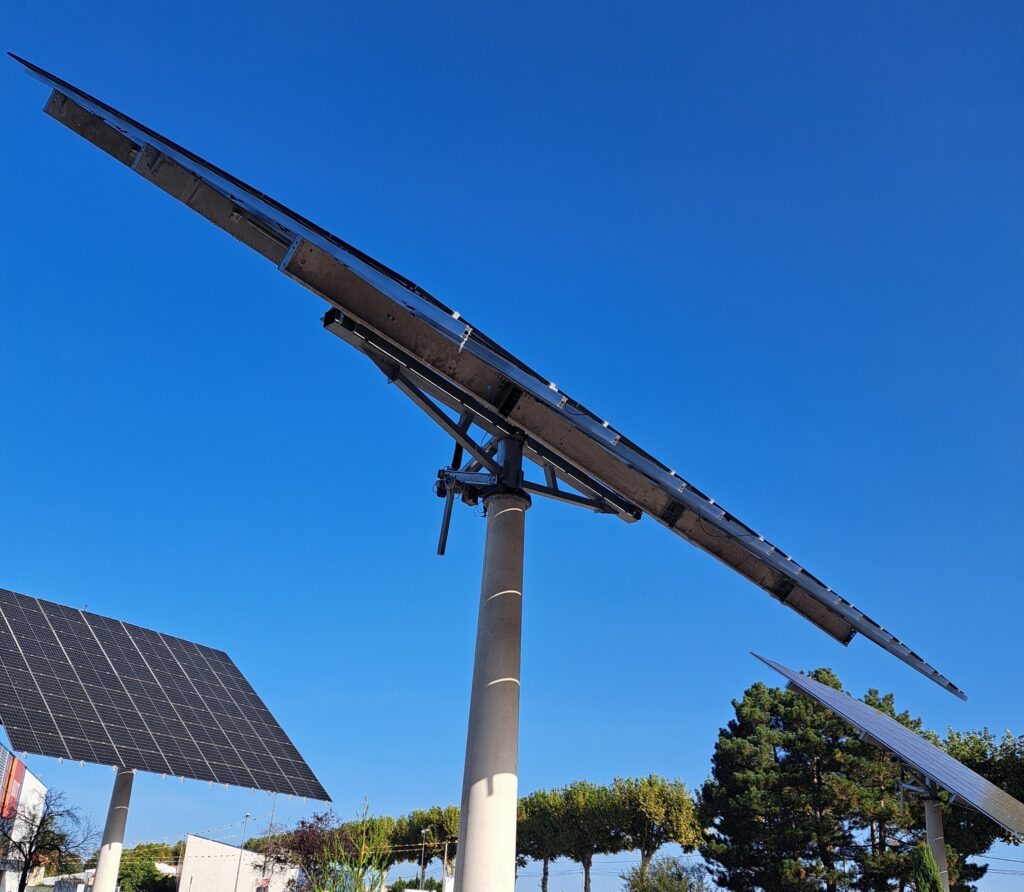
Partnership with THALIE for the installation of solar trackers to reduce energy consumption and a company’s carbon footprint
Investments in machinery to optimize personnel safety